
Sacraments
Baptism
Baptism is the first of the sacraments of initiation. In Baptism we are cleansed from original sin, reborn by water and the Holy Spirit, and incorporated into Christ and his Church. Baptism welcomes people—infants, children and adults—into the life of the Christian community.
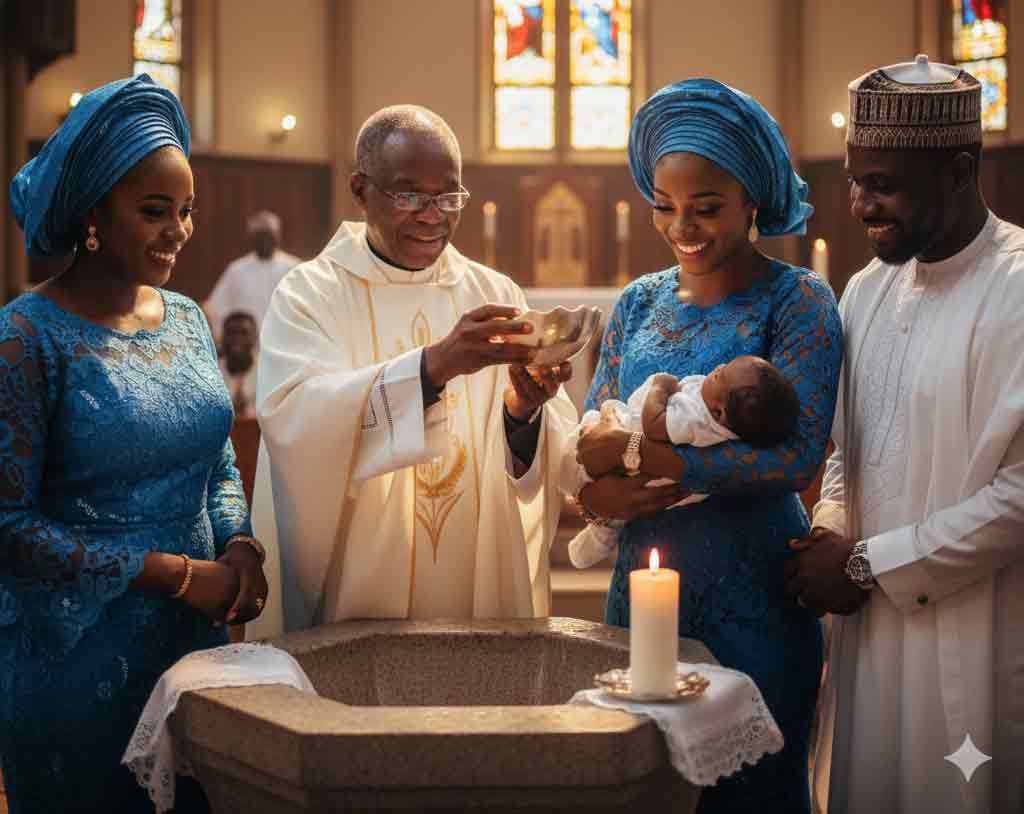
Quick facts
Biblical basis: Matthew 28:19; John 3:5; Acts 2:38.
Matter: water (pouring, immersion).
Form (essential words): “I baptize you in the name of the Father, and of the Son, and of the Holy Spirit.”
Minister: ordinary minister is a bishop, priest or deacon; in emergency any person with the proper intention.
Effects: cleansing of sin, new birth in the Spirit, incorporation into the Church, reception of sanctifying grace, indelible character (forgiveness and initiation).
Typical pastoral practice: parents register, attend a short preparation class, pick godparents (canonical requirements), book a Sunday or weekday baptism.
Biblical basis & teaching
Jesus commands baptism (Matthew 28:19). Scriptural references to new birth (John 3:5), forgiveness and gift of the Spirit (Acts 2:38) undergird Catholic baptismal theology.
Matter & Form
Matter: water (pouring, immersion or sprinkling) applied to the baptized.
Form: the Trinitarian formula pronounced by the minister: “I baptize you in the name of the Father, and of the Son, and of the Holy Spirit.”
Who may receive
Infants: baptized upon parental request and with suitable godparents who undertake Christian formation obligations.
Adults: normally baptized after catechesis (RCIA or adapted process for adults).
Emergency baptisms: permitted when life is at risk.
Primary effects
Removes original sin (and personal sins for adults).
Incorporation into the Body of Christ and the Church.
Reception of sanctifying grace.
Gives an indelible spiritual mark (character): Baptism cannot be repeated.
Preparation (pastoral steps)
Contact parish office to request for date.
Parents/Godparents attend a short baptism prep session.
Provide copy of child’s birth record (parish policy).
Choose godparents (at least one practicing Catholic who meets canonical qualifications).
Confirm the date and liturgy details with the Parish office.
How to book
Contact Us (Click here).
Its recommended to book several weeks in advance.
FAQ
Q: Can a non-Catholic be a godparent?
A: A godparent normally must be a baptized, confirmed Catholic who leads a sacramental life. One non-Catholic Christian may serve as a Christian witness alongside a Catholic godparent (parish-dependent).
Q: Is infant baptism required?
A: The Church recommends infant baptism for Catholic families. Adults seeking baptism normally follow RCIA.
Q: Can we hold Baptism at home?
A: The parish normally celebrates Baptism at the church; emergency home baptisms are permitted when needed.
Confirmation
Confirmation completes baptismal grace: the Holy Spirit is given in a special way so the baptized are strengthened to witness to Christ by word and action. It deepens gifts of the Spirit and binds the person more firmly to the Church.
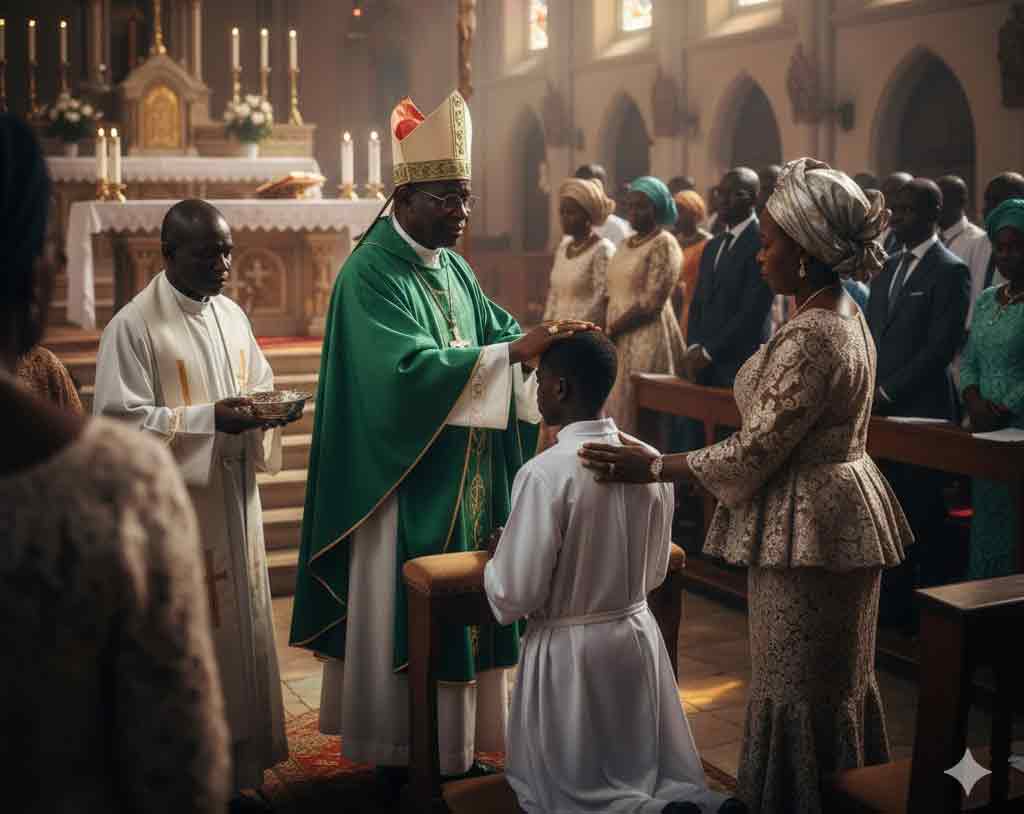
Quick facts
Biblical basis: Acts 8:14–17; Acts 2:1–4; Hebrews/Pauline references to laying on of hands.
Matter: sacred chrism (holy oil) and the laying on of hands.
Form: anointing with chrism and the words “Be sealed with the Gift of the Holy Spirit.”
Minister: ordinary minister is the bishop; priest may confirm with proper faculty or in specific pastoral situations.
Effects: deepening of baptismal grace, sacramental character (indelible mark), increased gifts of the Holy Spirit for Christian maturity and apostolic witness.
Typical pastoral practice: confirmation preparation classes, sponsor (one sponsor), a bishop often presides for the sacrament.
Biblical basis & teaching
Scripture: apostles laying hands and Spirit given (Acts 8, 19; Acts 2 Pentecost). Confirmation is rooted in apostolic practice of imparting the Spirit through laying on of hands.
Matter & Form
Matter: the anointing with chrism (sacred oil) and the laying on of hands.
Form: the formula said by the minister, e.g., “Be sealed with the Gift of the Holy Spirit.”
Who may receive
Baptized Catholics who have reached the age of reason and completed preparation (age varies by diocese).
Normally given once; the sacrament imparts a character and is not repeated.
Primary effects
Strengthens Christian life and apostolic mission.
Confers special outpouring of Holy Spirit’s gifts (wisdom, understanding, counsel, fortitude, knowledge, piety, fear of the Lord).
Indelible spiritual mark.
Preparation
Parish confirmation program (catechesis, service projects, retreats).
Sponsor chosen (active Catholic confirmed adult).
Practice / rehearsal (usually day before or morning of).
Bishop or authorized priest presides.
How to book / register
Registration: Start by Contacting the Parish Office.
FAQ
Q: At what age is Confirmation in our parish?
A: The usual age depends on diocesan policy; check parish notices (often early teens or older).
Q: Can a confirmed Catholic be re-confirmed?
A: No — Confirmation imprints an indelible spiritual character and is received once.
Eucharist — Holy Communion
The Eucharist (Holy Communion) is the “source and summit” of Christian life. In the Mass bread and wine become the Body and Blood of Christ. The faithful receive Communion so as to be united sacramentally with Christ and fellow believers.
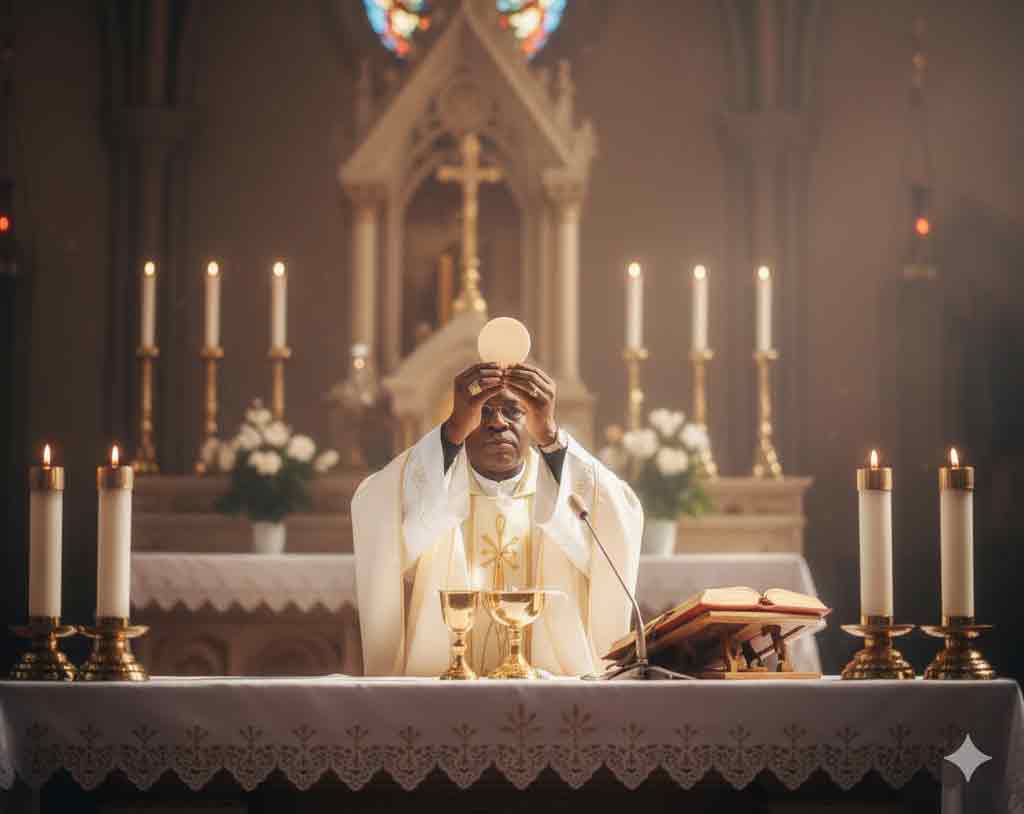
Quick facts
Biblical basis: Last Supper narratives (Matthew 26:26–28, Luke 22:19–20), 1 Corinthians 11:23–26.
Matter: unleavened bread and grape wine.
Form: words of consecration pronounced by the priest (e.g., “This is my body… This is my blood…”).
Minister: priest or bishop for consecration; priest or deacon may distribute Communion.
Effects: real presence of Christ (transubstantiation), spiritual nourishment, union with Christ and the Church, strengthening against sin.
Typical practice: children receive First Holy Communion after catechesis (age of reason), regular Sunday and daily Communion for Catholics in a state of grace.
Biblical basis & teaching
Jesus institutes the Eucharist at the Last Supper (synoptic Gospels & Paul). The Church teaches the bread and wine become Christ’s Body and Blood (real presence) and that the Mass is a sacrificial memorial.
Matter & Form
Matter: wheat bread (unleavened in the Latin rite) and grape wine.
Form: Eucharistic prayers and the words of consecration by the priest.
Who may receive
Baptized Catholics properly prepared and in a state of grace (no mortal sin).
Children: normally after reaching the age of reason and completing First Communion preparation.
Requirements: observance of Eucharistic fast (per diocesan norms), reconciliation if in grave sin.
Primary effects
Union with Christ and the Church.
Increases sanctifying grace and Christian life.
Forgives venial sins, strengthens against temptation.
Preparation & First Communion
Parish catechesis / First Communion classes.
First Confession (if applicable) prior to first Holy Communion.
Practice liturgy / rehearsal for children and families.
How to receive & pastoral notes
Those aware of mortal sin should first go to sacramental confession.
Non-Catholic visitors: invite them to speak with the priest — general practice is to refrain from Communion unless in full communion with the Catholic Church.
FAQ
Q: How often should Catholics receive Communion?
A: Catholics are encouraged to receive frequently—weekly (Sunday obligation) and even daily if properly disposed.
Q: Can a non-Catholic receive Communion?
A: Generally no; only baptized Catholics in full communion with the Church receive the Eucharist.
Penance (Reconciliation / Confession)
The sacrament of Penance (Reconciliation, Confession) restores sinners to God’s grace. It is a sacrament of conversion, forgiveness, and healing—through contrition, confession, absolution and penance.
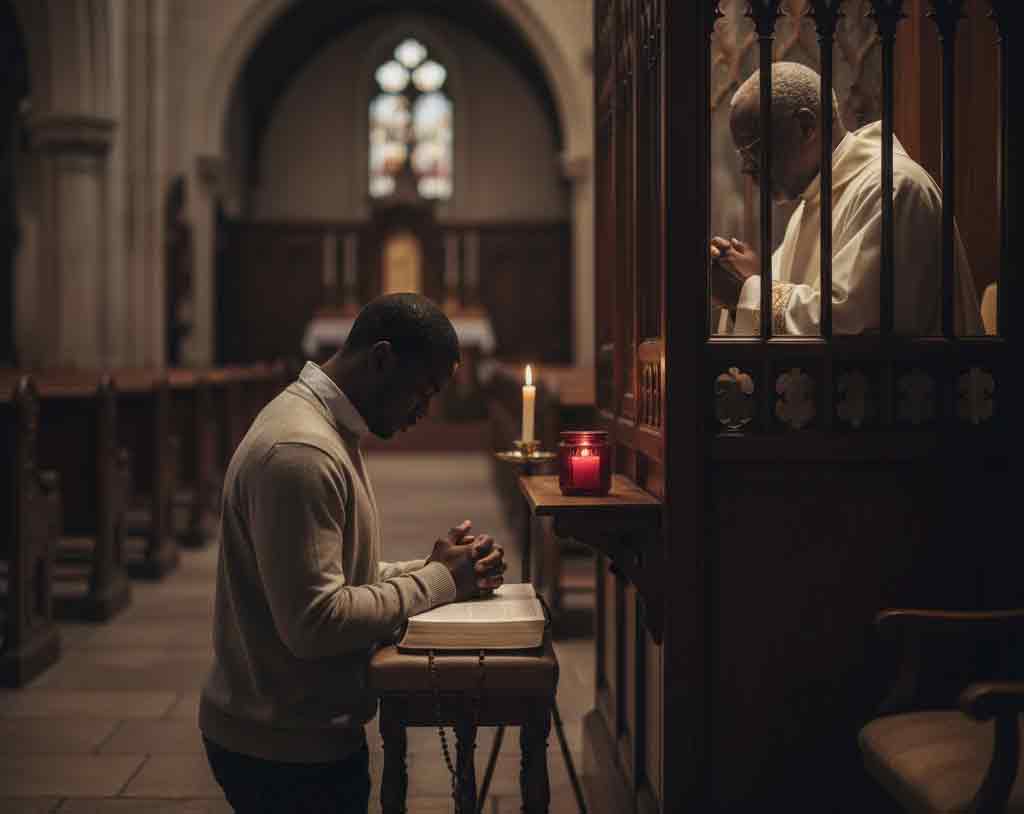
Quick facts
Biblical basis: John 20:21–23 (Jesus gives the apostles authority to forgive sins); Luke 15 (parables of mercy).
Matter: acts of the penitent (contrition, confession, satisfaction/penance).
Form: words of absolution pronounced by the priest.
Minister: priest or bishop (only they can absolve sins in Christ’s name).
Effects: forgiveness of sins, reconciliation with God and Church, restoration of sanctifying grace, spiritual consolation and guidance.
Biblical basis & teaching
Jesus gives the apostles the power to forgive sins (John 20:21–23). Reconciliation is the Church’s ministry of mercy, restoring those who repent.
Matter & Form
Matter: genuine contrition, confession of sins, purpose of amendment, and the performance of assigned penance.
Form: the formula of absolution pronounced by the priest.
Who may receive
Any baptized person who has committed sin and desires reconciliation.
Catholics are required to confess grave (mortal) sins at least once a year (Canon law) and strongly encouraged to frequent confession for spiritual growth.
Primary effects
Forgiveness of sins committed after Baptism.
Reconciliation with God and the Church.
Peace and spiritual healing.
Preparation & pastoral practice
Examine conscience (use aid sheets).
Make a sincere act of contrition.
Confess sins to the priest, accept penance, receive absolution.
Perform penance and ongoing amendment of life.
Confession times
Visit the ‘Activities’ page (Click here)
Holy Orders
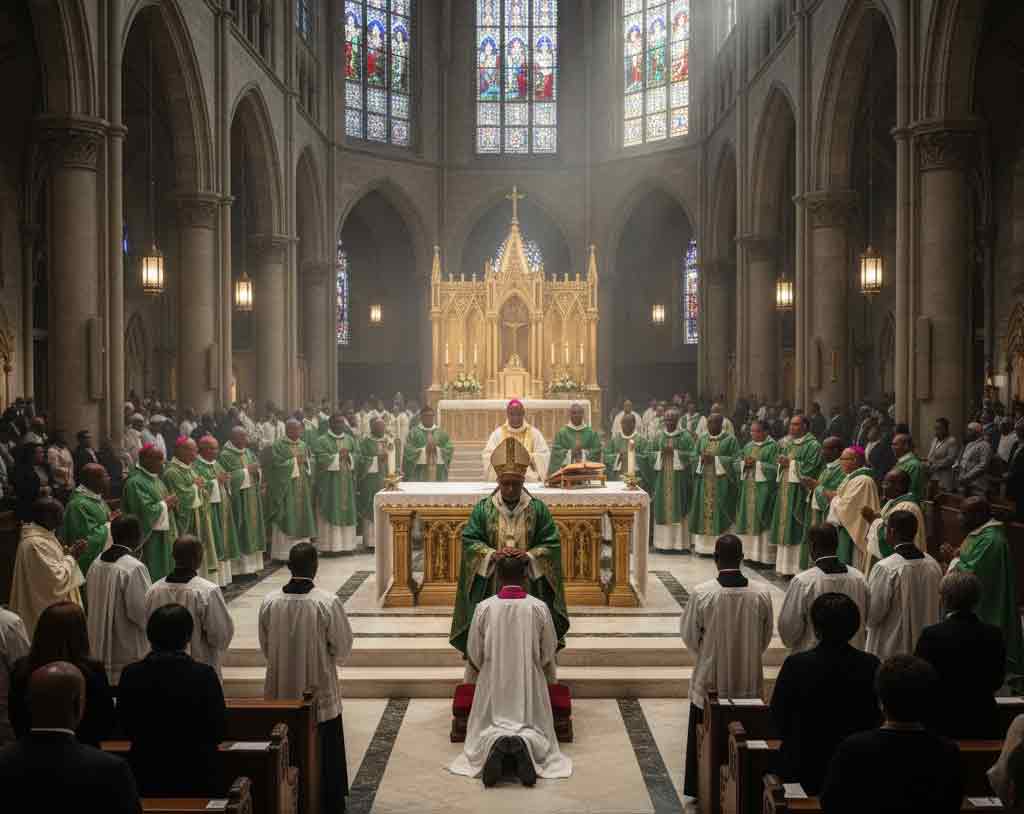
Holy Orders is the sacrament by which men are ordained deacons, priests, or bishops to serve the Church. Through the laying on of hands and the prayer of consecration, candidates receive the grace needed to minister in Christ’s name.
Quick facts
Biblical basis: Acts 6:6 (ordination of deacons); 1 Timothy 4:14; apostolic succession.
Matter: laying on of hands by a bishop; essential rite.
Form: prayer of ordination invoking the Holy Spirit and consecrating the ordained to ministry.
Minister: bishop (only a bishop ordains).
Orders: three degrees—deacon, priest, bishop.
Effects: a permanent sacramental character (for priest and bishop), grace for ministry, integration into apostolic succession.
Biblical basis & teaching
Scripture shows apostolic commissioning and the laying on of hands (Acts 6:6; Acts 13:3). Holy Orders continues apostolic ministry through bishops, priests and deacons.
Matter & Form
Matter: the laying on of hands by the bishop(s).
Form: the consecratory prayer specific to the order being conferred.
Who may receive
Candidates who meet Church requirements: a man called to the ordained ministry, adequate formation, diocesan or religious community endorsement, and canonical suitability. (For permanent diaconate, married men may be ordained deacons under conditions; for priesthood candidates normally unmarried or celibate in Latin Church unless a married converted clergy case.)
The Church discerns and tests vocation through formation programs and seminary.
Primary effects
Configures the ordained to Christ for ministry (proclaiming the Gospel, administering sacraments).
Indelible character (orders are not repeated).
Grace to lead, teach, and shepherd the People of God.
Formation & vocation steps
Initial vocational enquiry and spiritual direction.
Seminary or diaconal formation program.
Letters of suitability from bishop or major superior.
Ordination by bishop after required formation.
How to inquire
Contact the diocesan vocation director or the parish priest for discernment resources: [vocations contact].
FAQ
Q: Can a woman receive Holy Orders in the Catholic Church?
A: The Catholic Church ordains men to Holy Orders; this is the Church’s current discipline and teaching. (Pastoral note: welcome women’s leadership in other ministries in the Church.)
Q: Are ordinations only once?
A: Yes—Holy Orders imprint a character and the sacrament is received once per degree (deacon/priest/bishop).
Anointing of the Sick
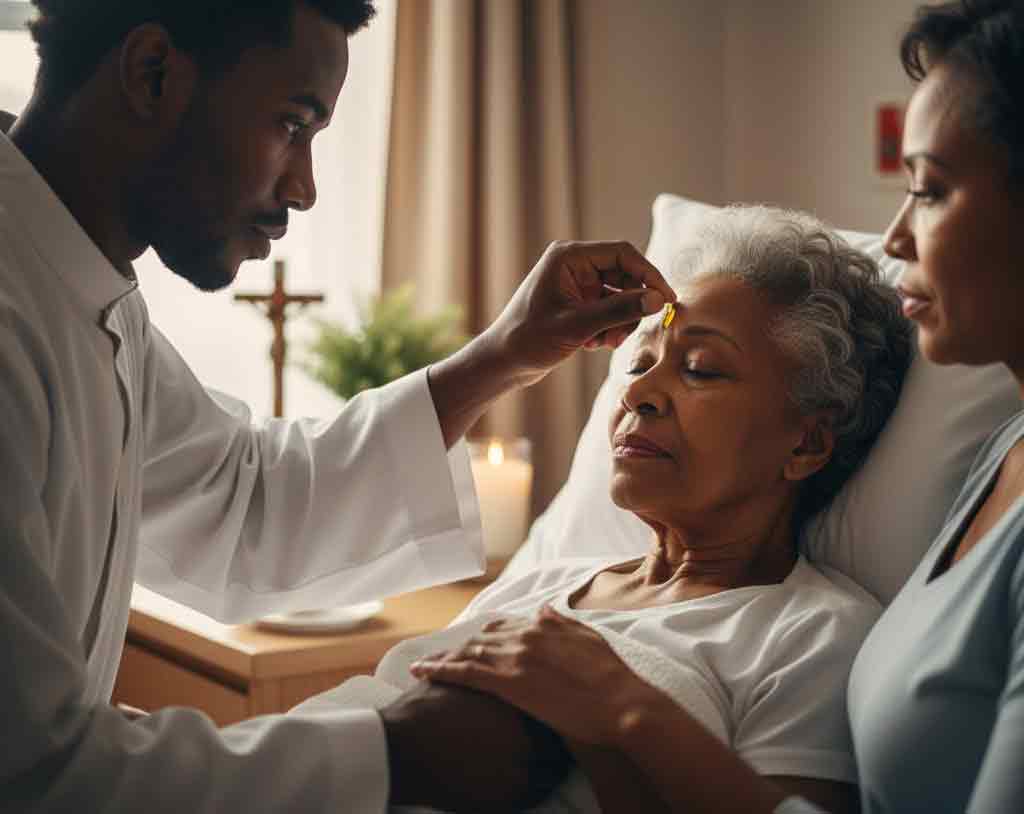
Anointing of the Sick is the sacrament of healing, offered to bring God’s comfort, strength and forgiveness to those who are seriously ill, elderly, or near death. It can bring physical, spiritual and emotional support.
Quick facts
Biblical basis: James 5:14–15 (call for elders to anoint the sick).
Matter: oil of the sick (blessed by the bishop) and the laying on of hands.
Form: prayer of the priest asking God to help and heal in Christ’s name.
Minister: a priest or bishop (not a deacon).
Effects: healing (physical if God wills), spiritual strength, forgiveness of sins, peace, and preparation for passing to eternal life.
Biblical basis & teaching
James 5:14–15 prescribes anointing by elders for the sick. The sacrament is a sign of Christ’s healing presence.
Matter & Form
Matter: olive oil (or suitable oil) blessed as Oil of the Sick.
Form: the prayer of anointing pronounced by the priest and the laying on of hands.
Who may receive
Those who are gravely ill, facing serious surgery, elderly with serious decline, or near death.
May be repeated as illness worsens or new serious illness appears.
Primary effects
Spiritual strengthening, forgiveness of sins, union with Christ’s suffering, possible physical healing according to God’s will, preparation for passing into the Lord.
Pastoral practice
Call the parish when someone is seriously ill. Priests will visit hospitals or homes to anoint and pray.
For scheduled surgery, parishioners often request the sacrament beforehand.
FAQ
Q: Does receiving Anointing of the Sick mean death is imminent?
A: Not necessarily. The sacrament is for anyone facing serious illness; it is not only for the dying.
Q: Can a person be anointed more than once?
A: Yes—if the condition worsens or a new serious illness occurs, it can be repeated.
Matrimony (Marriage)
Matrimony is the sacrament that joins a baptized man and woman in a lifelong covenant of faithful love, ordered to the good of the spouses and the procreation and education of children. In marriage, spouses minister the sacrament to one another with the Church’s blessing
Quick facts
Biblical basis: Matthew 19:4–6; Ephesians 5:25–33.
Matter & Form (Catholic theology): the mutual exchange of consent by the spouses—their freely given vows—constitute the essential rite (the spouses are the ministers). The Church’s blessing and nuptial rite complete the sacrament.
Minister: the spouses are the ministers (the priest or deacon witnesses and blesses on behalf of the Church).
Effects: covenantal bond, grace for married life, openness to children, strengthening of love and fidelity.
Typical pastoral practice: marriage preparation (pre-Cana), document checks, banns/publication, liturgy planning.
Biblical basis & teaching
Scripture and apostolic teaching describe marriage as covenantal and symbolic of Christ’s love for the Church (Ephesians 5). Jesus’ teaching underscores permanence and fidelity.
Matter & Form
Matter/Form (in Catholic understanding): the essential action is the exchange of consent between the spouses (their vows). The priest/deacon acts as the Church’s official witness and blesses the marriage.
The ritual includes promises, blessing, and nuptial Mass (if desired).
Who may receive / canonical notes
Two baptized persons (for a valid sacramental marriage); a Catholic marrying a non-baptized person requires permission and canonical form issues.
Both must be free to marry (no impediments) and give free consent.
For Catholics, canonical form normally requires marriage before a Catholic minister and two witnesses unless dispensed.
Primary effects
Indissoluble covenant (except by death; a valid sacramental marriage cannot be dissolved by human authority).
Grace to live married life and raise children in faith.
Mutual sanctification and support.
Preparation (pastoral steps)
Contact parish well in advance (6–12 months recommended) to begin preparation.
Pre-marriage inventory and pre-Cana classes.
Documents: baptismal certificates (recent), confirmation proof, freedom to marry (no impediment), civil requirements.
Book priest, reserve church, plan liturgy and readings.
Marriage banns or publication (per diocesan rules) and civil registration if required.
How to book
Begin with the parish office: [marriage booking link or email]. Book early.
FAQ
Q: Can a Catholic marry a non-Catholic?
A: Yes, with proper permissions. The Church provides pastoral guidance to respect the Catholic partner’s faith and the children’s religious upbringing.
Q: What is an annulment?
A: An annulment (declaration of nullity) is a Church judgment that a valid sacramental marriage was not present from the start due to impediments; it is not a “Catholic divorce.”